The Lost Star
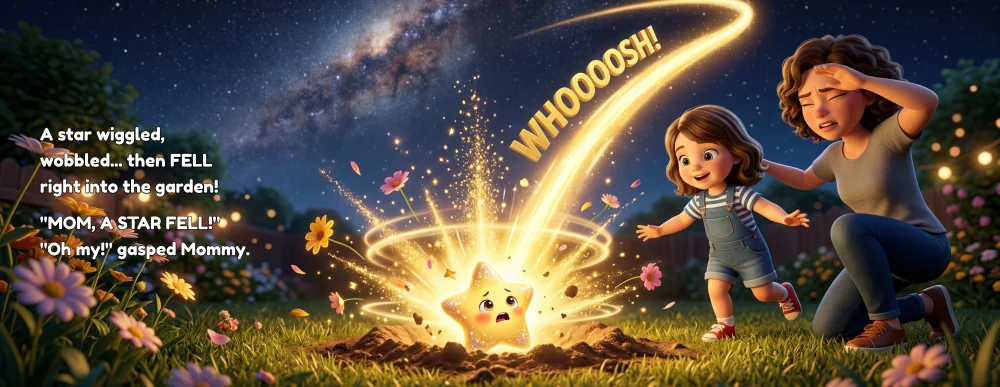
A tiny lost star named Stella crash-lands in the backyard. The child and Mom must journey through the solar system to bring her home.
"Our bedtime routine is now a magical event every night!"
Premium hardcover · Ships in 7–11 days
Personalize This Story ✨🔒 Secure checkout · 100% satisfaction guarantee
🔒 Secure checkout · 100% satisfaction guarantee
The Story
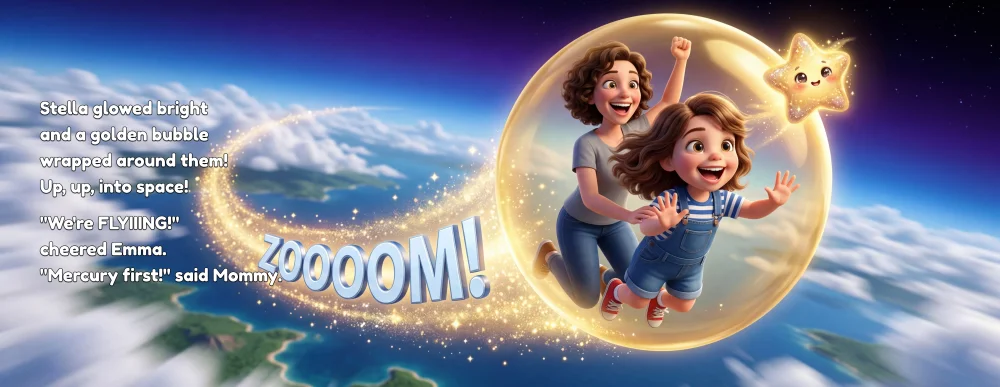
A star wiggles, wobbles, and falls right into the garden. Her name is Stella, she is very lost, and your child promises to get her home. Stella wraps your child and Mom in a golden bubble and up they go: a trip through the whole solar system, one planet per page, from Mercury out to Pluto.
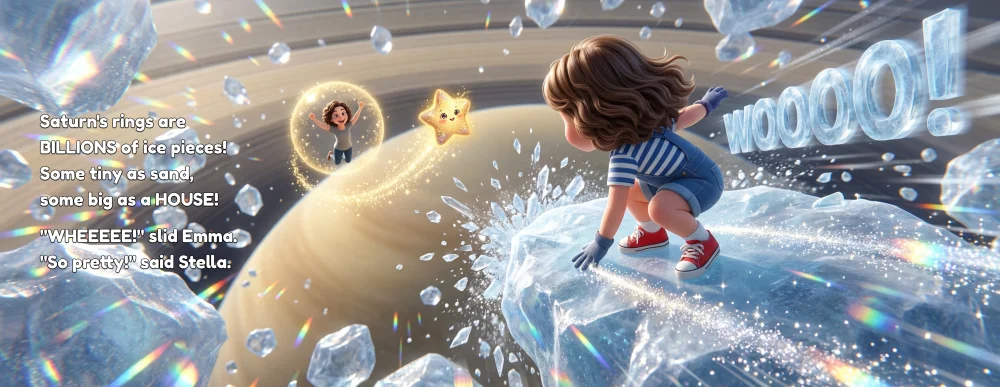
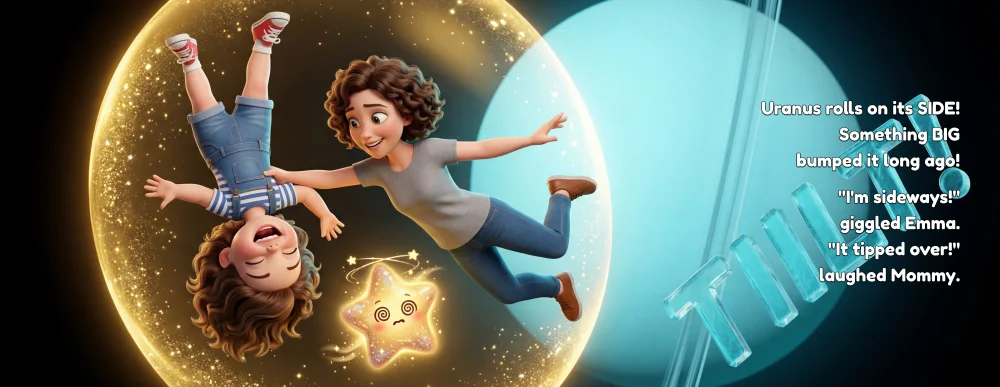
Every stop comes with one real fact, told the way a child would feel it. Hot, cold, hot, cold on Mercury. Sliding across the ice in Saturn's rings. Turning sideways with Uranus. Back home, one star glows extra bright, and your child is sure it winks back. The last line is "Goodnight, Stella," which makes it an easy bedtime book to reach for.
A Real Fact on Every Planet
Simple enough for a three-year-old, true enough for a nine-year-old to repeat at school.
-
Mercury
The smallest planet and closest to the Sun. One side roasts while the other freezes.
-
Venus
Even hotter than Mercury, because its thick clouds trap the heat like a blanket.
-
Earth
A tiny blue marble from space, and the only planet we know with water and air to breathe.
-
Mars
Home to the tallest mountain in the solar system, and to robots sent from Earth.
-
Jupiter
The biggest planet, made of swirling gas, with a red storm larger than Earth.
-
Saturn
Rings made of billions of pieces of ice, some as small as sand and some as big as a house.
-
Uranus
Rolls around the Sun on its side, probably because something huge knocked it over long ago.
-
Neptune
The fastest winds in the solar system, faster than any jet plane.
-
Pluto
Tiny and far away at the edge, where Stella can finally go home.
Questions About The Lost Star
Are the space facts in The Lost Star accurate?
Yes, simplified for young children. Each planet gets one true fact: Mercury is the smallest and closest to the Sun, Jupiter's storm is bigger than Earth, Saturn's rings are pieces of ice, Uranus spins on its side and Neptune has the fastest winds. Pluto appears as the tiny last stop at the edge, without being called a planet.
Is The Lost Star a good bedtime book?
It was written to end at bedtime. Your child comes home, looks up at the sky, finds Stella glowing among the stars and says goodnight to her. It takes about three to four minutes to read aloud.
What age is The Lost Star for?
Ages 2 to 10. Toddlers follow the bubble ride and the sound effects, while older children pick up the planet facts, which are real enough to bring to school.
How is The Lost Star personalized?
You upload a photo of each character and type in their name. The story is already written, so your child's name goes into the text and every illustration is drawn from your photos, keeping them recognizable from the first page to the last. Before anything is printed you get the full editor: change any word, regenerate any illustration you are not happy with, and write your own dedication.
How much does it cost, and how long does delivery take?
$34.99 for the 26-page premium hardcover, plus shipping at checkout: $8.24 to the United States or $6.65 to Australia. Each book is printed to order once you approve it and arrives in 7 to 11 business days.
Make The Lost Star Their Story
Upload a photo, preview every page, and change anything you like before it prints.
Personalize This StoryReady in minutes · Premium hardcover $34.99 · 100% satisfaction guarantee